
Carbon Fiber Reinforced
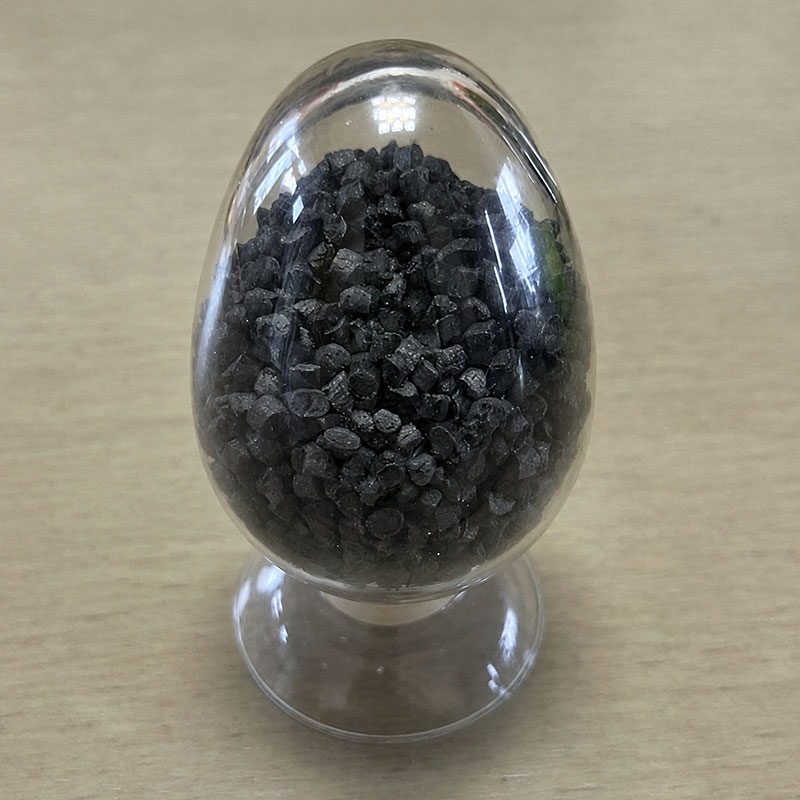
15% Carbon fiber ABS
Model: 757CF20/757CF30/757CF15
RENJIE carbon fiber reinforced ABS is a high-performance thermoplastic composite based on ABS resin with carbon fiber reinforcement. It offers high strength, heat resistance, conductivity, anti-static performance and improved dimensional stability for injection-molded structural and electronic components.
| Product Description | Carbon fiber reinforced ABS |
|---|---|
| RenJie®Grade | 757CF20/757CF30/757CF15 |
| Base Polymer | Acrylonitrile Butadiene Styrene (ABS) |
| Volume Resistivity On Specimen | < 1E5 ohm.cm |
| Surface Resistance On Specimen | Granules/Natural |
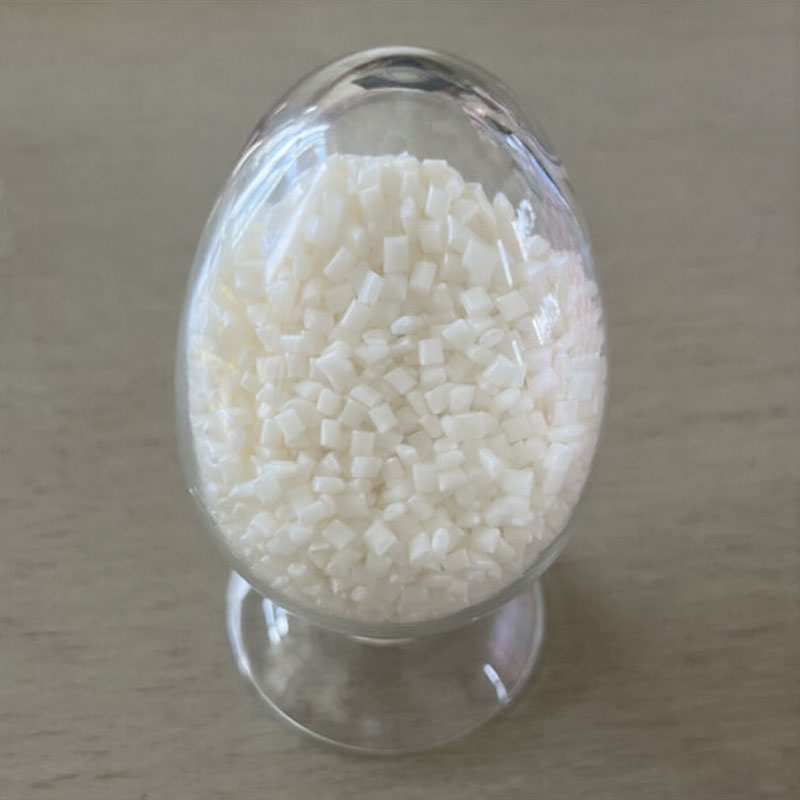
| Appearance | Granules/Black |
Introduction to RENJIE Carbon Fiber Reinforced ABS
RENJIE carbon fiber reinforced ABS is a composite material based on acrylonitrile-butadiene-styrene copolymer ABS, reinforced with carbon fiber to improve mechanical and functional performance. Due to the conductive nature of carbon fiber, the compound can provide anti-static and conductive properties, and the conductivity level depends on the carbon fiber content.
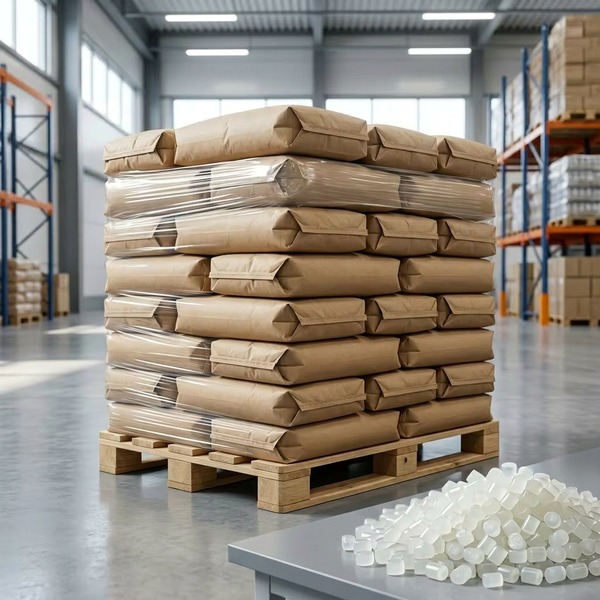
RENJIE 757CF15 belongs to the carbon fiber reinforced thermoplastic series with 15% carbon fiber filling. This compound is specially designed for injection molding. Compared with metals, carbon fiber reinforced plastics are lighter and can effectively reduce product weight by 15% to 40%. In addition to the 15% grade, 20%, 25% and 30% carbon fiber filled pellets are also available depending on application requirements.
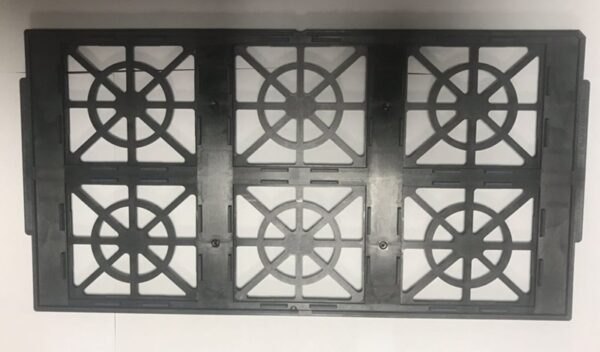
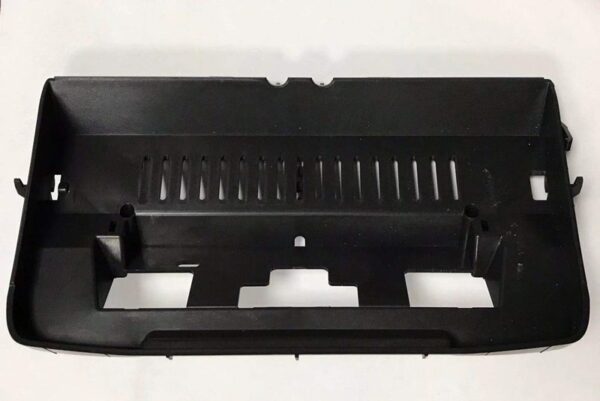
The material features high mechanical strength and good heat resistance, with a long-term service temperature up to 80°C. It maintains stable mechanical properties under thermal conditions and offers excellent dimensional stability, making it suitable for structural parts, electronic housings, automotive components and industrial accessories.
Carbon fiber reinforced ABS Key Features
High mechanical strength and stiffness: Carbon fiber reinforcement improves tensile, flexural and anti-deformation performance.
Good heat resistance: Long-term use temperature can reach 80°C.
Excellent dimensional stability: Carbon fiber helps reduce thermal expansion, shrinkage and warpage.
Anti-static and conductive properties: Carbon fiber forms conductive pathways to prevent static accumulation.
Good chemical resistance: Specially modified grades show stable performance against various solvents and corrosive liquids.
Lightweight design advantage: Lower density than metals supports weight reduction.
How to Improve the Dimensional Stability of RENJIE Carbon Fiber Reinforced ABS
1. Select Suitable ABS Resin and Apply Proper Pretreatment
Ensure stable quality of both ABS resin and carbon fiber, including molecular weight distribution, purity and fiber dispersion. Selecting ABS resin with a low coefficient of thermal expansion and good compatibility with carbon fiber helps reduce dimensional instability caused by material mismatch.
Carbon fiber reinforced ABS is sensitive to moisture. The material should be fully dried before processing to avoid negative effects on melt flow, molding behavior and final dimensions. Typical drying conditions are 80–90°C for 2–4 hours, adjustable according to moisture content and production equipment.
2. Optimize Injection Molding Process Parameters
Set the barrel temperature to achieve complete melting without overheating or degradation. The typical barrel temperature for injection molding RENJIE carbon fiber reinforced ABS is 220–260°C, but it should be fine-tuned based on material formulation and equipment. Excessive temperature may increase fluidity but can also cause thermal degradation, affecting product performance and dimensional stability.
A properly increased mold temperature can slow down cooling inside the mold, reduce internal stress and improve dimensional stability. The mold temperature is generally controlled at 75–85°C; higher mold temperatures may be required for large or complex parts.
Injection pressure and speed should also be balanced. Too high pressure or speed may create excessive internal stress and cause size changes after demolding, while too low pressure or speed may lead to incomplete filling and unstable dimensions.
3. Optimize Mold Design
The mold cavity should be designed to avoid uneven wall thickness, sharp corners and right angles that may cause stress concentration. Rounded transitions are recommended to reduce residual stress and post-molding deformation.
Mold dimensional accuracy directly affects the dimensional stability of the final product. High-precision machining and strict tolerance control should be applied during mold manufacturing. In addition, a reasonable cooling channel layout is essential to ensure uniform cooling and minimize uneven shrinkage.
4. Choose Proper Carbon Fiber Length, Diameter and Surface Treatment
Carbon fiber length and diameter influence dispersion, melt flow and mechanical performance. Shorter carbon fibers are generally easier to disperse uniformly in the ABS matrix, while excessively long fibers may reduce material flowability and increase processing difficulty. The appropriate fiber specification should be selected according to part geometry, wall thickness, flow distance and processing method.
Surface treatment of carbon fiber can further improve performance. Coupling agents help enhance fiber dispersion, reduce fiber agglomeration and strengthen the interface between carbon fiber and the ABS matrix, thereby improving mechanical properties and dimensional stability.
5. Apply Post-Processing Treatments
Annealing can relieve internal stress and improve dimensional stability. Annealing temperature and time should be determined based on product size, wall thickness and application requirements, typically near the glass transition temperature of the material, ranging from several hours to dozens of hours.
For products with strict dimensional requirements, humidity conditioning may also be considered. Controlled moisture absorption can help reduce internal stress and stabilize dimensions. Conditioning conditions should be defined according to the service environment of RENJIE carbon fiber reinforced ABS.
| Product Description | Carbon fiber reinforced ABS |
|---|---|
| RenJie®Grade | 757CF20/757CF30/757CF15 |
| Base Polymer | Acrylonitrile Butadiene Styrene (ABS) |
| Volume Resistivity On Specimen | < 1E5 ohm.cm |
| Surface Resistance On Specimen | Granules/Natural |
| Appearance | Granules/Black |
| Processing | Injection/Extrusion |
| Features | High strength,light weight,good fluidity |
| Applications | Injection molded parts, 3D printing filaments |
Related products
709AN/747AN/920AN
Antistatic ABS Compound
RENJIE® antistatic ABS compound with 10^8–10^10 Ω surface resistance. 709A…
View details70CF30/70CF20/70CF15
30% Carbon Fiber Nylon 66
Explore Carbon Fiber Conductive Nylon properties, CFRTP Conductive Nylon g…
View details5090CF20/5090CF30/5090CF15
30% Carbon Fiber PP
Discover RENJIE's carbon fiber reinforced thermoplastic (CFRTP) solutions.…
View detailsRequest a quotation or sample
We reply with price, MOQ and lead time within one business day.
Need a quotation or product data?
Send us your specification and we will come back with a solution within 24 hours.