
Conductive Compound

Conductive PE Compound
Model: C401/C403/CT-08A
PE conductive compound is a polyethylene raw material with conductive and antistatic functions. Usually black, it is mainly used to produce conductive PE films.
| Product Description | Conductive PE Compound |
|---|---|
| RenJie®Grade | C401/C403/CT-08A |
| Surface Resistivity | 10^2~10^5 Ohm/sq |
| Volume Resistivity | 10^2~10^4 Ohm.cm |
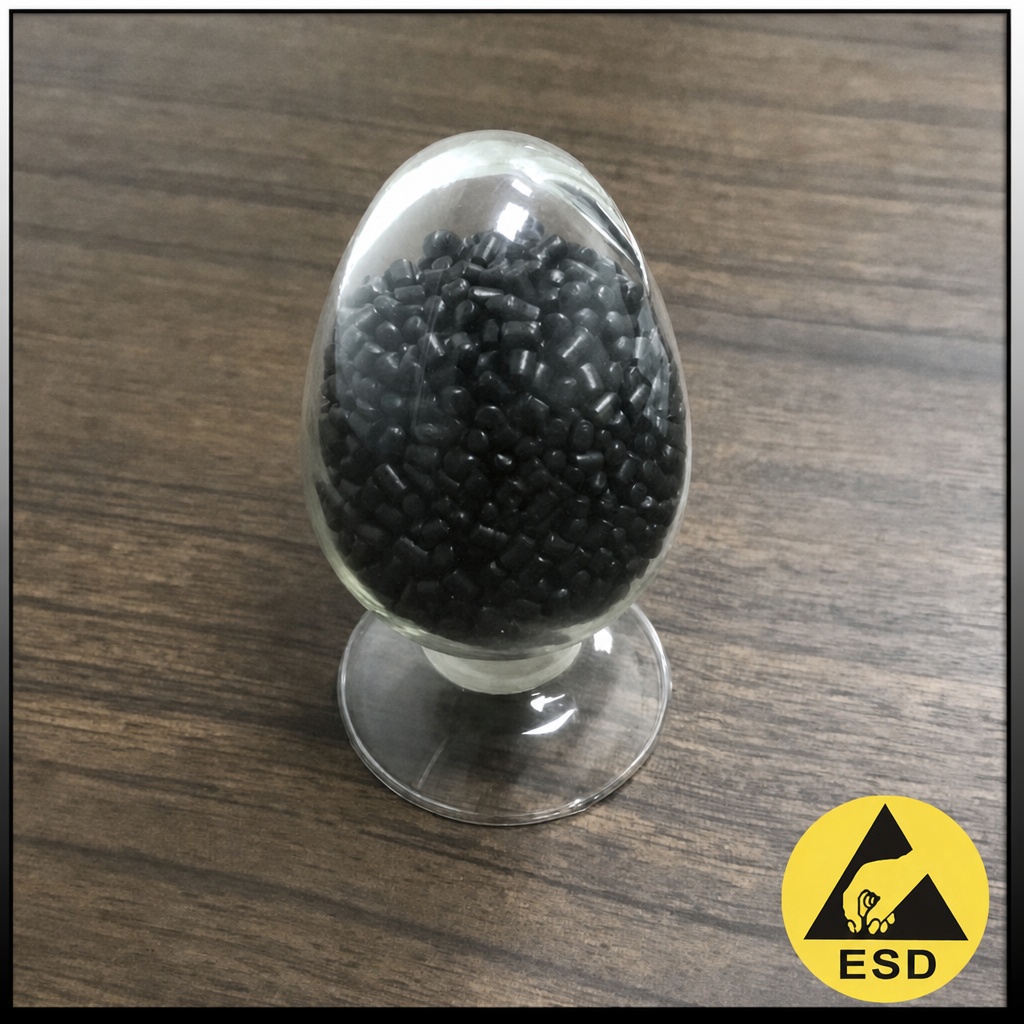
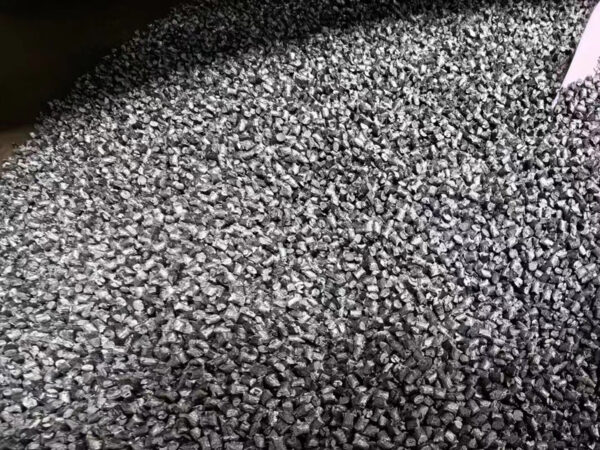
| Appearance | Granules/Black |
| Conductive filler | Carbon black /Carbon nanotube etc |
1. Introduction to PE Conductive Compound
PE conductive compound is a polyethylene plastic raw material with conductive function and antistatic effect. By formulating appropriate PE resin, it delivers suitable conductive and antistatic properties. PE conductive compound is usually black and is mainly used to produce conductive PE films.
1.1 CT-08A: Conductive PE Compound Usable as a Conductive Masterbatch
CT-08A is a conductive compound made of polyethylene (PE) as the carrier with conductive fillers such as carbon black and carbon nanotubes. Due to its extremely low resistance, it can also be used as a conductive masterbatch.
- Loading and target resistance: at an addition amount of 30–60%, it is designed for conductive films (thickness 0.015 mm) to reach 1.0 × 10⁴–1.0 × 10⁶ Ω;
- Performance: stable conductivity and good dispersibility, with little loss in the mechanical properties of the material;
- Ease of use: easy to use and can be processed after dry mixing, ensuring no powder falling on the surface of the final product.
1.2 C403: Carbon Nanotube-Based Conductive Compound
C403 is a carbon nanotube-based conductive compound formed by combining carbon nanotubes with other substances:
- It has extremely high elasticity and toughness;
- Its electrical conductivity is significantly better than graphene-based and carbon black-based conductive compounds, and the thinner the diameter and the longer the length, the better the electrical conductivity;
- It has high thermal conductivity at room temperature and excellent axial thermal conductivity.
2. Application Cases of PE Conductive Compound
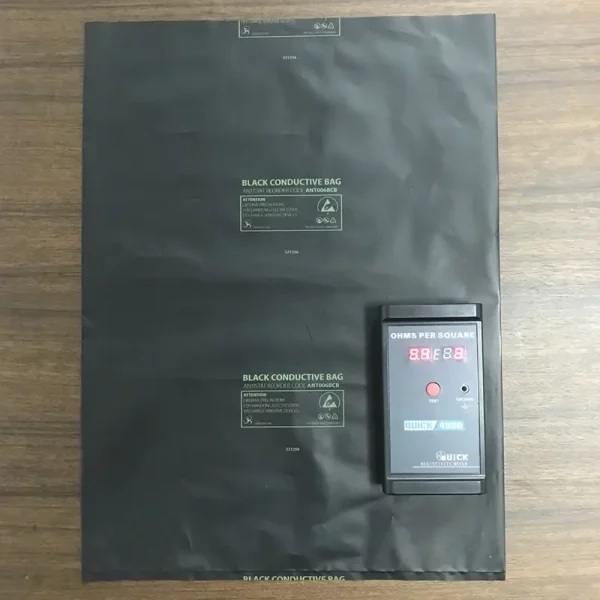
Image alt text suggestion: CONDUCTIVE PE conductive PE film
2.1 Semi-Conductive Shielding Layers and Electronic Equipment Parts
PE conductive compound is used for the semi-conductive shielding layers of wires and cables and for the shells and parts of electronic equipment. It can be used as semi-conductive shielding material for medium and high voltage cables.
It is also suitable for electronic equipment requiring electrostatic protection, such as the shells, internal brackets and connectors of mobile phones, computers and tablets.
2.2 Antistatic Packaging for Electronic Components
Used to manufacture antistatic packaging for electronic components, such as antistatic trays and packaging bags. This avoids problems such as dust adsorption and damage to electronic components caused by static electricity during transportation and storage, providing a good electrostatic protection environment for electronic products.
2.3 Automotive Parts and Interiors
Used as packaging or turnover materials for automotive electrical systems, fuel systems, water tank radiators, dashboards and other parts. PE conductive compound can also be used for automotive interior parts and components to reduce the interference of static electricity on automotive electronic systems. While improving the safety and comfort of the vehicle, it effectively prevents the generation and accumulation of static electricity.
2.4 Conductive PE Film and Demanding Environments
PE conductive film has a small friction coefficient and strong wear resistance, and can also be used in the energy field, mainly to protect precision parts from damage by static electricity.
In special environments such as coal mines and oil tankers where flammable gas or dust exists, conductive masterbatch is used to make equipment housings and parts — for example, ventilation ducts in coal mines and oil storage containers on oil tankers.
3. Classification of RenJie® Conductive Compound
RenJie® conductive compounds fall into four families based on the conductive filler system:
| Filler system | Key characteristics | Typical applications |
|---|---|---|
| Carbon nanotube-based | Extremely high elasticity and toughness; conductivity significantly better than graphene-based and carbon black-based compounds; high room-temperature thermal conductivity with excellent axial conduction | Li-ion battery conductive agent, nanoelectronic components, wave absorption and shielding, thermal conduction and reinforcement |
| Graphene-based | Single-atom-layer structure, extremely thin and among the strongest materials; high carrier mobility at room temperature with excellent conductivity | Conductive films and transparent electrodes, composite modification, energy devices |
| Carbon black-based | Light, loose and large surface area; inexpensive and easy to process, but with a high percolation threshold (requires high loading) | The most commonly used conductive plastic for ESD composites in industry; antistatic plastics and conductive rubbers |
| Carbon fiber-based | High specific surface area and aspect ratio, forming conductive networks easily; good mechanical strength and chemical stability | High-performance electrode materials (sodium-ion batteries, supercapacitors); reinforcement in composites |
3.1 Carbon Nanotube-Based Conductive Compound
Carbon nanotubes, also known as buckytubes, are one-dimensional quantum materials formed by single or multiple layers of graphene curled around the central axis at a certain spiral angle. They have extremely high elasticity and toughness, with a Young's modulus of nearly 6 times that of steel and a tensile strength of 100 times that of steel.
Applications include:
- Li-ion battery conductive agent: increases battery capacity, reduces the amount of conductive agent, enhances electrolyte absorption, lowers internal resistance, increases high-rate discharge power density and improves cycle life;
- Nanoelectronic components: diodes, triodes, nanowires, etc.;
- Multifunctional polymer composites: wave absorption and shielding, heat conduction, reinforcement and conductivity;
- Other fields: hydrogen storage, energy storage materials, catalyst materials, sensors, atomic force microscope probes, supercapacitors, biosensors and more.
3.2 Graphene-Based Conductive Compound
Graphene is a honeycomb single-atom-layer planar film formed by carbon atoms in an sp2 hybrid manner. Only 0.35 nm thick and among the strongest materials, it also has good toughness, with a theoretical Young's modulus of 1.0 TPa and an intrinsic tensile strength of 130 GPa. At room temperature, its carrier mobility reaches 15,000 cm²/(V·s), giving excellent conductivity.
Applications include:
- Conductive films and transparent electrodes: for example, touch screens and displays of electronic devices;
- Composite modification: adding graphene improves the electrical, thermal and mechanical properties of the material, supporting high-performance aerospace materials, automotive parts and sports equipment;
- Energy field: preparation of supercapacitors, battery electrode materials and more.
3.3 Carbon Black-Based Conductive Compound
Carbon black is a light, loose, large-surface-area zero-dimensional carbon-based conductive nanoparticle that is inexpensive and easy to process. However, a large amount of carbon black conductive particles is usually required to transition the material from insulation to conductivity — that is, its conductive percolation threshold is high.
Carbon black-based conductive compounds are currently the most commonly used electrical conductive plastics in the preparation of ESD (electrostatic discharge) composite materials in industry, and are often used for the conductive modification of polymer materials such as plastics and rubbers — for example, antistatic plastics and conductive rubbers.
3.4 Carbon Fiber-Based Conductive Compound
Carbon fiber has a high specific surface area and aspect ratio, making it easy to form a conductive network; it also has good mechanical strength and chemical stability.
Applications include:
- Preparing high-performance electrode materials such as sodium-ion batteries, supercapacitors and other energy storage devices;
- Acting as a reinforcement in composite materials to improve conductivity and mechanical properties.
4. Key Parameters at a Glance (Selection Reference)
| Item | CT-08A | C403 |
|---|---|---|
| Material positioning | PE-based conductive compound, also usable as a conductive masterbatch | Carbon nanotube-based conductive compound |
| Carrier / base | Polyethylene (PE) | Carbon nanotubes combined with other substances |
| Conductive filler | Carbon black, carbon nanotubes, etc. | Carbon nanotubes |
| Recommended loading | 30–60% | — |
| Target resistance | 1.0 × 10⁴–1.0 × 10⁶ Ω (film thickness 0.015 mm) | — |
| Key characteristics | Stable conductivity, good dispersibility, little mechanical loss, dry-mix processable, no powder falling | Extremely high elasticity and toughness, better conductivity than graphene- and carbon black-based, excellent axial thermal conduction |
| Typical applications | Conductive PE film, semi-conductive shielding compound, antistatic trays and packaging bags, automotive parts | High-end conductive and thermal management applications |
| Product Description | Conductive PE Compound |
|---|---|
| RenJie®Grade | C401/C403/CT-08A |
| Surface Resistivity | 10^2~10^5 Ohm/sq |
| Volume Resistivity | 10^2~10^4 Ohm.cm |
| Appearance | Granules/Black |
| Conductive filler | Carbon black /Carbon nanotube etc |
| Processing | Blowing/Injection/Extrusion |
| Applications | ESD packaging sheet, conductive LLDPE film |
| Applying to | HDPE LDPE LLDPE |
Related products
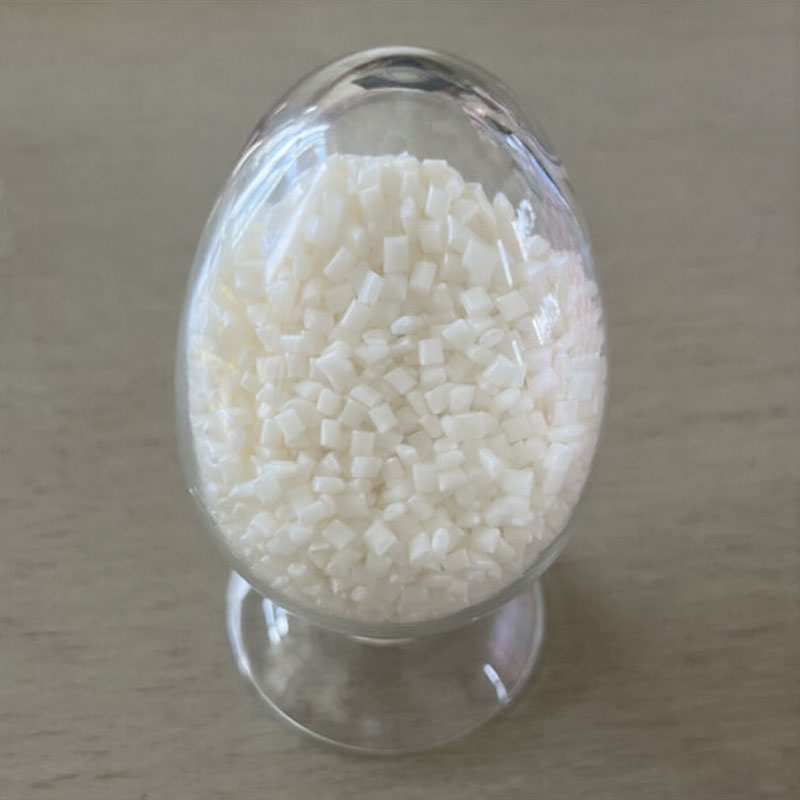
709AN/747AN/920AN
Antistatic ABS Compound
RENJIE® antistatic ABS compound with 10^8–10^10 Ω surface resistance. 709A…
View details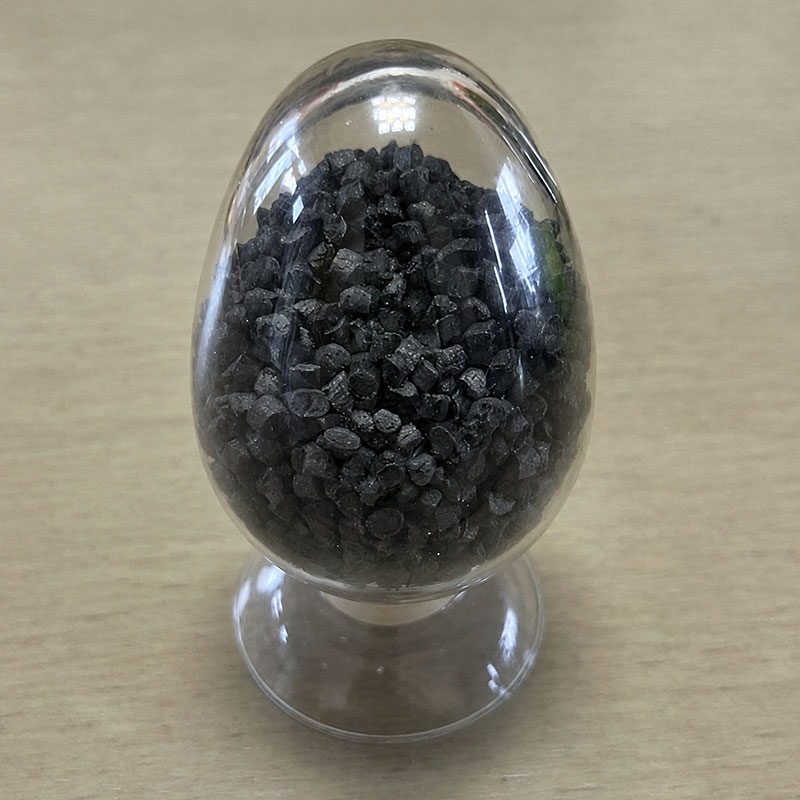
757CF20/757CF30/757CF15
15% Carbon fiber ABS
RENJIE carbon fiber reinforced ABS is a high-performance thermoplastic com…
View details70CF30/70CF20/70CF15
30% Carbon Fiber Nylon 66
Explore Carbon Fiber Conductive Nylon properties, CFRTP Conductive Nylon g…
View detailsRequest a quotation or sample
We reply with price, MOQ and lead time within one business day.
Need a quotation or product data?
Send us your specification and we will come back with a solution within 24 hours.