
Permanent Antistatic Additives
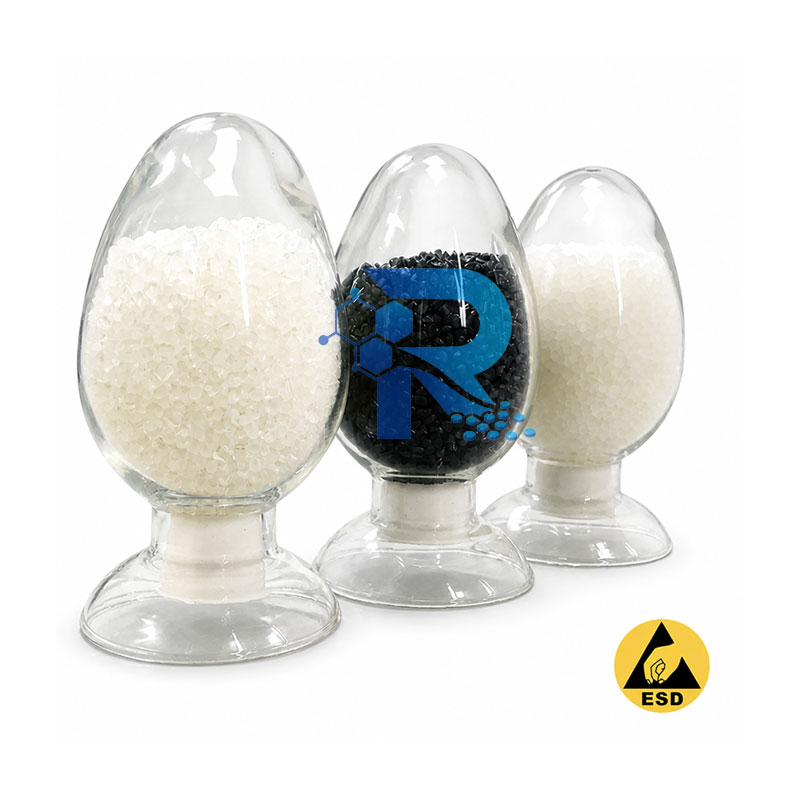
Antistatic Additives For MABS
Model: 120T/130T/190T
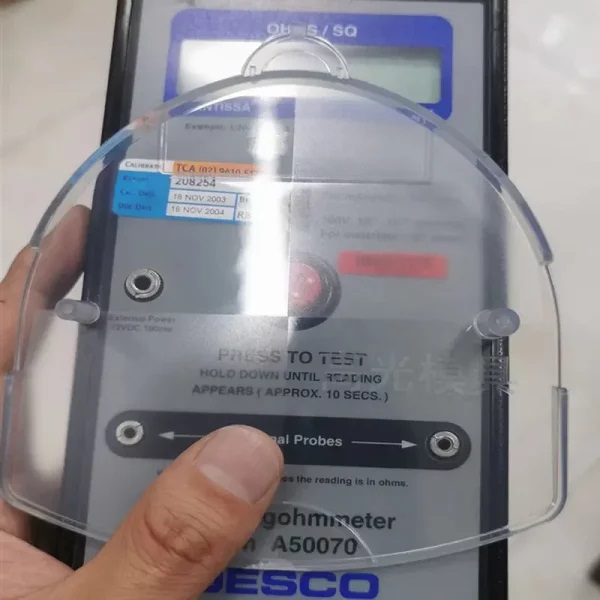
A complete guide to antistatic agents for transparent plastics: 120T is a permanent internally added antistatic agent for transparent ABS at 10%~25 wt% dosage, reaching about 10E8 ohms at 20%; 130T is an antistatic masterbatch dry-mixed at about 10% for 10E10~10E11 ohm systems.
| Product Description | Antistatic agent for plastics transparent |
|---|---|
| RenJie®Grade | 120T/130T/190T |
| Base Polymer | Acrylonitrile Butadiene Styrene (ABS) |
| Surface Resistance On Specimen | 1.9×10E6 Ohms |
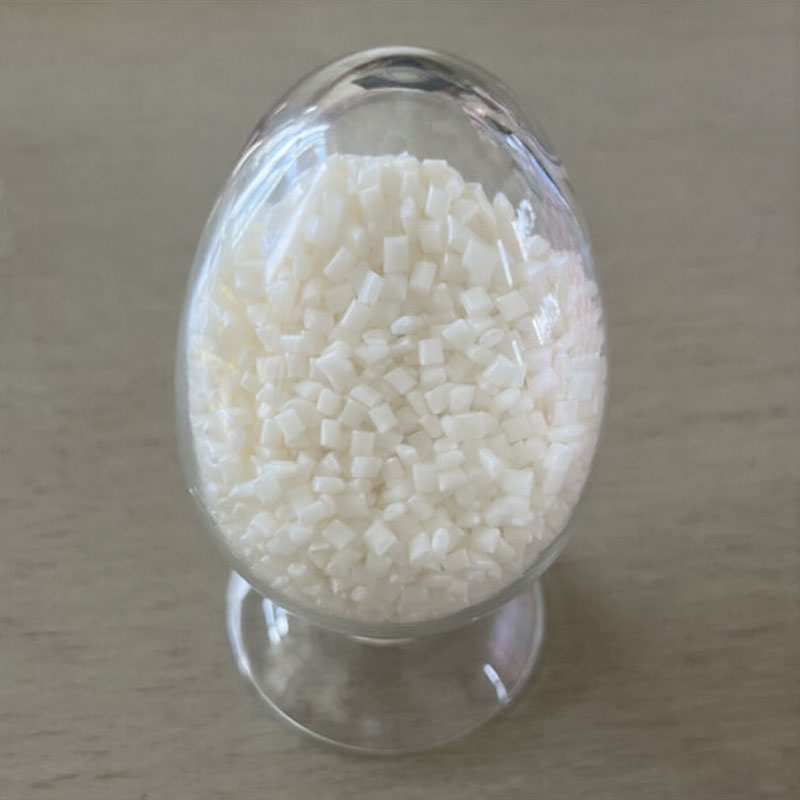
| Appearance | Granules/Pale yellow |
| Melting Point | 185°C-190°C |
Transparent Plastics Antistatic Agent (MABS): Properties, Dosage and Applications
An antistatic agent for plastic transparency is an ESD additive designed for transparent polymers. It provides antistatic performance while preserving the transparency of ESD polymers. This article reviews the properties, dosage, processing methods and main applications of the 120T and 130T grades, and explains the core features of antistatic agents for transparent plastics.
1. What Is an Antistatic Agent for Transparent Plastics?
An antistatic agent for plastic transparency is an ESD additive designed for transparent polymers. It ensures the transparency of ESD polymers while providing an antistatic function. Commonly used antistatic agents for plastic transparency are based on MABS, PP, TPU, GPPS, PMMA, PVC, PETG and PCT.
The product has low dependence on humidity, which ensures that the surface resistivity of the end product changes little across different humidity environments.
2. Transparent Plastics Antistatic Agent Grades: 120T and 130T
| Grade | Type | Recommended dosage | Achievable resistance value | Processing / use |
| 120T | Permanent, internally added antistatic agent | 10%~25 wt% | About 10E8 ohms for an ESD polymer containing 20% of 120T | Injection molding, extrusion, blow molding |
| 130T | Antistatic masterbatch (ESD concentrate) | About 10% | Suitable for ESD polymers of 10E10~10E11 ohms | Directly dry-mixed; no compounding required |
120T: Permanent Antistatic Agent for Transparent ABS
120T is a permanent, internally added antistatic agent for transparent ABS. It prevents the static-related problems that occur on the surface of transparent ABS and has good compatibility with transparent ABS such as LG 558A and Toray 920-555. It can be processed by injection molding and extrusion, with a recommended dosage level of 10%~25 wt%. The resistance value of an ESD polymer containing 20% of 120T is about 10E8 ohms.
130T: Antistatic Masterbatch with No Compounding Required
130T is an antistatic masterbatch based on an antistatic agent for plastics. This ESD concentrate is suitable for ESD polymers with a resistance value of 10E10~10E11 ohms. It is directly dry-mixed at a ratio of about 10% and does not require compounding.
3. Applications of Transparent Plastics Antistatic Agents
120T and 130T are suitable for ESD transparent packaging sheets, ESD transparent packaging films and ESD transparent injection-molded parts. Their main applications are transparent IC chip trays and transparent IC containers in the semiconductor packaging industry, such as those used by Samsung Electronics and SK Hynix.
4. Five Core Features of Transparent Plastics Antistatic Agents
Maintaining High Transparency
While performing its antistatic function, the additive has little effect on the light transmittance of MABS resin. It is suitable for products with high transparency requirements such as optical devices and transparent plastic products, ensuring that products remain clearly visible without affecting the visual effect.
Minimal Impact on the Base Material
During compounding, the antistatic agent has no adverse effect on the basic properties of the material, including mechanical, thermal and chemical properties. This ensures that the product still maintains its original performance characteristics and quality standards after the antistatic agent is added.
Immediate and Long-Term Action
120T and 130T are both non-hygroscopic ionomer resins, which are permanent antistatic additives for plastics.
Convenient Use Across Production Stages
120T is favorable for compounders and can be processed by injection molding, extrusion and blow molding; 130T can be used directly in dry blending and is favorable for sheet or film manufacturers.
Low Addition Level and Better Cost Efficiency
The antistatic agent for plastic transparency requires a low addition amount, making it more cost-effective than buying ESD polymers or antistatic masterbatches.
5. Why the Self-Compounding Route Uses Less Additive
A notable advantage of antistatic agents for transparent plastics is their low addition level. Because the agent is added directly to an existing formulation, the dosage required is lower than that of purchasing ready-made ESD polymers or antistatic masterbatches, making it more cost-effective for the same performance target. In addition, 130T can be dry-mixed without compounding, removing one processing step.
6. Transparent Plastics Antistatic Agent FAQ
Q1: What are the recommended dosage and achievable resistance value of 120T?
The recommended dosage level of 120T is 10%~25 wt%. An ESD polymer containing 20% of 120T reaches a resistance value of about 10E8 ohms.
Q2: How is 130T used, and which resistance range does it cover?
130T is an antistatic masterbatch that is directly dry-mixed at a ratio of about 10% without compounding, and it is suitable for ESD polymers with a resistance value of 10E10~10E11 ohms.
Q3: Does it affect transparency or the performance of the base material?
No. It has little effect on the light transmittance of MABS resin and is suitable for products with high transparency requirements such as optical devices. Nor does it have adverse effects on the basic mechanical, thermal or chemical properties of the material during compounding.
Q4: Which resins is it compatible with?
120T has good compatibility with transparent ABS such as LG 558A and Toray 920-555. Commonly used antistatic agents for plastic transparency also cover substrates including MABS, PP, TPU, GPPS, PMMA, PVC, PETG and PCT.
Q5: Is it affected by ambient humidity?
It has low dependence on humidity, ensuring that the surface resistivity of the end product changes little across different humidity environments. Both 120T and 130T are non-hygroscopic ionomer resins.
Q6: Where is it mainly applied?
It is mainly used for transparent IC chip trays and transparent IC containers in the semiconductor packaging industry, as well as ESD transparent packaging sheets, ESD transparent packaging films and ESD transparent injection-molded parts.
Q7: Which processing methods can be used?
120T can be processed by injection molding, extrusion and blow molding and is favorable for compounders; 130T can be used directly in dry blending and suits sheet or film manufacturers.
Conclusion: How to Select an Antistatic Agent for Transparent Plastics
The core value of these antistatic agents lies in combining transparency with antistatic performance, with minimal impact on the base material and immediate, long-lasting action. Selection comes down to three points: first, match the grade to the target resistance — 120T for systems around 10E8 ohms and 130T for 10E10~10E11 ohm systems; second, choose the form that fits the production stage — 120T for compounding operations and 130T for direct dry blending at sheet or film lines; and third, confirm the transparency requirement, since the additive has little effect on the light transmittance of MABS resin and suits optical devices and transparent plastic products. For specific dosage and formulation recommendations, please contact the RenJie® technical team.
| Product Description | Antistatic agent for plastics transparent |
|---|---|
| RenJie®Grade | 120T/130T/190T |
| Base Polymer | Acrylonitrile Butadiene Styrene (ABS) |
| Surface Resistance On Specimen | 1.9×10E6 Ohms |
| Appearance | Granules/Pale yellow |
| Melting Point | 185°C-190°C |
| Recommended Dosage | 10-25 wt% |
| Processing | Blowing/Casting/Injection/Extrusion |
| Applications | ESD packaging sheet, ESD packaging film |
Related products
709AN/747AN/920AN
Antistatic ABS Compound
RENJIE® antistatic ABS compound with 10^8–10^10 Ω surface resistance. 709A…
View details
757CF20/757CF30/757CF15
15% Carbon fiber ABS
RENJIE carbon fiber reinforced ABS is a high-performance thermoplastic com…
View details70CF30/70CF20/70CF15
30% Carbon Fiber Nylon 66
Explore Carbon Fiber Conductive Nylon properties, CFRTP Conductive Nylon g…
View detailsRequest a quotation or sample
We reply with price, MOQ and lead time within one business day.
Need a quotation or product data?
Send us your specification and we will come back with a solution within 24 hours.