
Conductive Compound
PVC Conductive Compound
Model: SA509C/SA505C/SA501C
Conductive PVC compound is a composite material with conductive properties made from polyvinyl chloride (PVC) as the base material by adding conductive fillers and other substances.
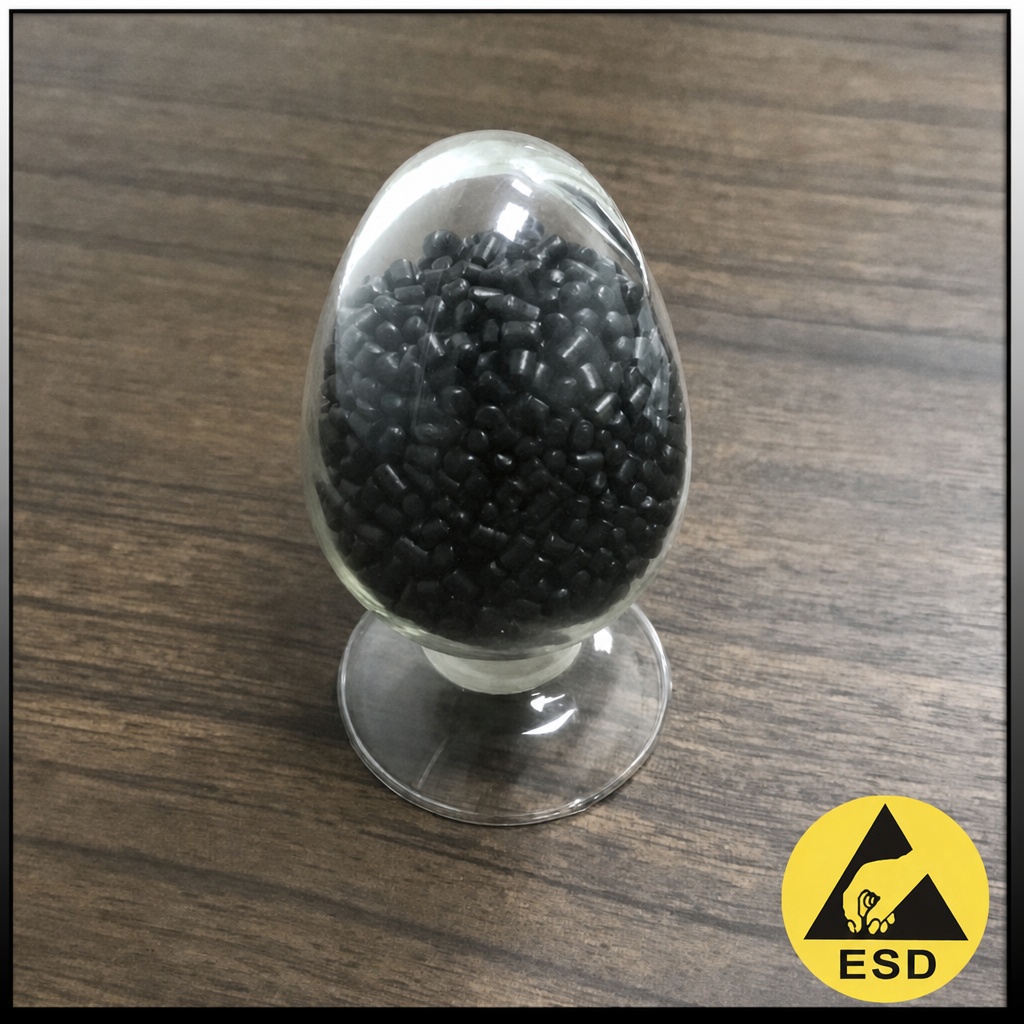
| Product Description | PVC conductive compound/PVC ESD compound |
|---|---|
| RenJie®Grade | SA509C/SA505C/SA501C |
| Surface Resistivity | 10^2~10^5 Ohm/sq |
| Volume Resistivity | 10^2~10^4 Ohm.cm |
| Appearance | Granules/Black |
| Conductive filler | Carbon black conductive/Carbon nanotube conductive,Graphene reinforced |
Conductive PVC compound is a composite material with conductive properties made from polyvinyl chloride (PVC) as the base material by adding conductive fillers and other substances. Carbon black and carbon nanotubes are the fillers most commonly used. This guide covers the RenJie® SA series of graphene conductive PVC — including the SA 509C grade developed for PVC ESD cable — together with the hardness range, performance characteristics and application fields of PVC conductive compounds.
1. What Is a PVC Conductive Compound?
A PVC conductive compound is a polymer composite material in which conductive fillers are dispersed in a polyvinyl chloride matrix. The filler forms a conductive network inside the PVC, so the finished part dissipates static charge instead of insulating it. Because the base material is PVC, the compound keeps the familiar processing behaviour, flexibility and formulation versatility of PVC while adding controlled electrical performance.
Permanent antistatic performance — the conductive network is built into the compound, not applied as a surface coating.
Flame retardant, V-0 rated — suitable for applications with strict fire-safety requirements.
Environmentally friendly with low VOC — reduced emissions for enclosed and clean environments.
Hardness range from 85 A to 60 D — covering flexible to semi-rigid ESD protection applications.
Ready for injection molding and extrusion — usable on standard PVC processing equipment.
Customizable properties — other performance requirements can be tailored to customer demand.
2. RenJie® SA Series Graphene Conductive PVC
The SA series of graphene conductive PVC is a group of polymer composite materials developed by RenJie®. The product mainly combines PVC and graphene materials to give PVC new electrical, thermal and mechanical strength properties, increase the added value of PVC and expand the application fields of PVC. Carbon black grade, carbon nanotube grade and graphene-reinforced grade are available. The SA series is suitable for injection molding and extrusion, and is RoHS and REACH compliant.
2.1 Available Grades
| Grade | Filler system | Notes |
| Carbon black grade | Carbon black | Suitable for injection molding and extrusion; RoHS and REACH compliant |
| Carbon nanotube grade | Carbon nanotubes | Suitable for injection molding and extrusion; RoHS and REACH compliant |
| Graphene-reinforced grade | Graphene combined with PVC | Graphene-reinforced system; the SA 509C grade is designed for PVC ESD cable |
2.2 SA 509C Graphene-Modified PVC ESD Compound
SA 509C is modified by graphene and other carbon materials. It features outstanding performance with conductive and antistatic properties. SA 509C is specially designed for applications of PVC ESD cable. The other properties can be customized according to customer demands.
2.3 Key Performance Characteristics
| Parameter | Specification |
| Hardness (PVC ESD compounds) | 85 A – 60 D, for ESD protection |
| Antistatic behaviour | Permanent antistatic |
| Flammability | Flame retardant, V-0 |
| Environmental performance | Environmentally friendly, low VOC |
| Compliance | RoHS and REACH compliant (SA series) |
| Processing methods | Injection molding and extrusion |
| Customization | Other properties customized according to customer demand |
3. Application Fields of PVC Conductive Compound
3.1 Antistatic Packaging for the Electronic Industry
PVC conductive compounds are widely used for antistatic and electromagnetic shielding packaging of electronic products. They prevent static electricity from damaging sensitive electronic components. In the packaging of integrated circuits, semiconductor chips and similar products, conductive PVC materials can effectively dissipate accumulated static electricity and protect the performance and reliability of electronic components.
3.2 Electromagnetic Shielding and Compatibility
Conductive PVC can be used to make electromagnetic shielding materials that shield the electromagnetic radiation generated by electronic equipment and reduce interference with the surrounding environment and other equipment. Using conductive PVC materials in the shells, cable sheaths and other parts of precision electronic instruments improves the electromagnetic compatibility of the equipment.
3.3 Industrial Field: Conductive PVC Floors
Conductive PVC floors are widely used in industrial environments that are sensitive to static electricity, such as electronic manufacturing workshops, pharmaceutical factories and operating rooms. This kind of floor can promptly guide away the static electricity generated by the human body and equipment, and prevent static sparks from causing fires or explosions.
3.4 Industrial Field: Conductive PVC Conveyor Belts
In material conveying systems that require antistatic performance, conductive PVC conveyor belts avoid problems such as material adsorption, blockage or spark discharge caused by the accumulation of static electricity.
3.5 Automotive Field
Some automotive parts use conductive PVC ESD materials to reduce the accumulation of static electricity in the car and improve riding comfort and safety — for example car seat covers and foot mats.
3.6 Special Working Environments
In workplaces that require antistatic protection, such as the petrochemical industry and the production of flammable and explosive goods, the work clothes worn by workers may use PVC ESD materials to prevent danger caused by static electricity.
4. Filler Systems for Conductive PVC: General Comparison
| Consideration | Carbon black | Carbon nanotube | Graphene |
| Conductivity at equal loading | Moderate | Highest | High |
| Typical filler loading | Highest | Lowest | Low to moderate |
| Dispersion difficulty | Low (well-established) | High | High (re-stacking risk) |
| Effect on mechanical properties | Higher loading reduces toughness | Small | Small to moderate |
| Additional functions | — | Axial thermal conductivity | Thermal and mechanical reinforcement |
| Relative cost | Lowest | Highest | Medium to high |
Note: the table is general guidance for filler selection only. The final grade, hardness and conductivity should be confirmed by testing the actual part, because the result depends strongly on the compounding and dispersion process.
5. Selecting and Processing a PVC Conductive Compound
Grade selection follows three questions: the electrical requirement (antistatic dissipation versus full conductivity), the flexibility requirement (which determines where the hardness sits between 85 A and 60 D), and the processing method (injection molding or extrusion). The SA series supports both injection molding and extrusion on standard PVC equipment.
Because processing parameters depend on the grade, the hardness and the specific equipment, they are not fixed here. Please refer to the grade TDS or contact the RenJie® technical team for the recommended temperature profile, drying and screw configuration for your machine.
6. Why Choose the RenJie® SA Series
Graphene conductive PVC technology developed by RenJie® — combining PVC with graphene and other carbon materials.
Three filler options — carbon black grade, carbon nanotube grade and graphene-reinforced grade.
New electrical, thermal and mechanical strength properties — increasing the added value of PVC and expanding its application fields.
Permanent antistatic, flame retardant V-0, environmentally friendly and low VOC.
Hardness from 85 A to 60 D — flexibility or rigidity, depending on the ESD application.
RoHS and REACH compliant, with other properties customizable to customer demand.
Injection molding and extrusion on standard PVC processing equipment.
7. Frequently Asked Questions (FAQ)
What is a PVC conductive compound used for?
It is used wherever static electricity has to be controlled: antistatic and electromagnetic shielding packaging for electronic products, ESD cable, conductive floors and conveyor belts in industrial environments, automotive ESD parts such as seat covers and foot mats, and antistatic workwear for petrochemical and flammable-goods production.
What is the difference between the carbon black, carbon nanotube and graphene grades?
The difference is the filler system. Carbon black is the established, cost-efficient route; carbon nanotubes deliver the highest conductivity per unit of filler; graphene-reinforced grades combine PVC with graphene and other carbon materials to add electrical, thermal and mechanical strength properties at the same time. All three are available in the RenJie® SA series for injection molding and extrusion.
What is SA 509C designed for?
SA 509C is modified by graphene and other carbon materials and features outstanding conductive and antistatic performance. It is specially designed for PVC ESD cable applications, and its other properties can be customized according to customer demand.
What hardness range do the PVC ESD compounds cover?
The hardness of the PVC ESD compounds ranges from 85 A to 60 D, covering flexible to semi-rigid ESD protection applications.
Are the RenJie® SA series grades RoHS and REACH compliant?
Yes. The SA series is RoHS and REACH compliant.
Can the properties of the compound be customized?
Yes. In addition to the standard conductive and antistatic behaviour, other properties can be customized according to customer demand — including hardness, flame retardancy, colour and specific electrical targets.
8. Get RenJie® PVC Conductive Compounds
RenJie® supplies the SA series of graphene conductive PVC, including the SA 509C grade for PVC ESD cable, in carbon black, carbon nanotube and graphene-reinforced versions. Tell us your target conductivity or surface resistance, hardness and processing method, and our technical team will recommend the right grade.
PVC conductive compound — SA series (carbon black, carbon nanotube, graphene-reinforced)
SA 509C — graphene-modified PVC ESD compound for ESD cable
Antistatic and electromagnetic shielding PVC for electronic packaging
Conductive PVC for floors, conveyor belts, automotive parts and workwear
| Product Description | PVC conductive compound/PVC ESD compound |
|---|---|
| RenJie®Grade | SA509C/SA505C/SA501C |
| Surface Resistivity | 10^2~10^5 Ohm/sq |
| Volume Resistivity | 10^2~10^4 Ohm.cm |
| Appearance | Granules/Black |
| Conductive filler | Carbon black conductive/Carbon nanotube conductive,Graphene reinforced |
| Processing | Blowing/Injection/Extrusion |
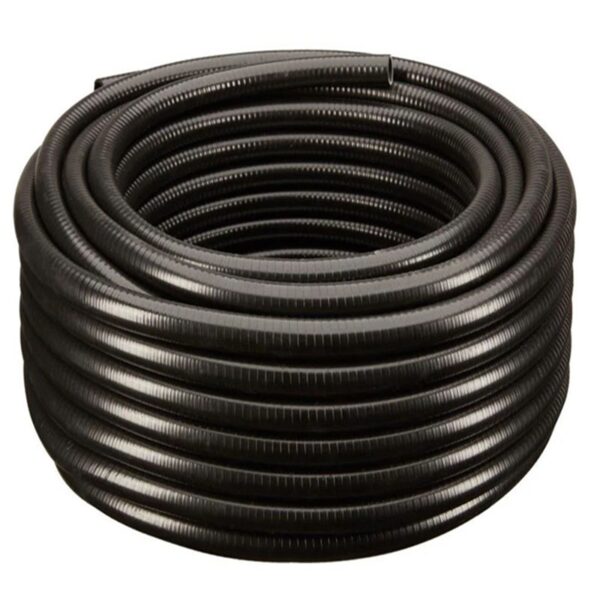
| Applications | ESD PVC pipes,conductive PVC hoses |
| Hardness | 85 A to 60 D |
Related products
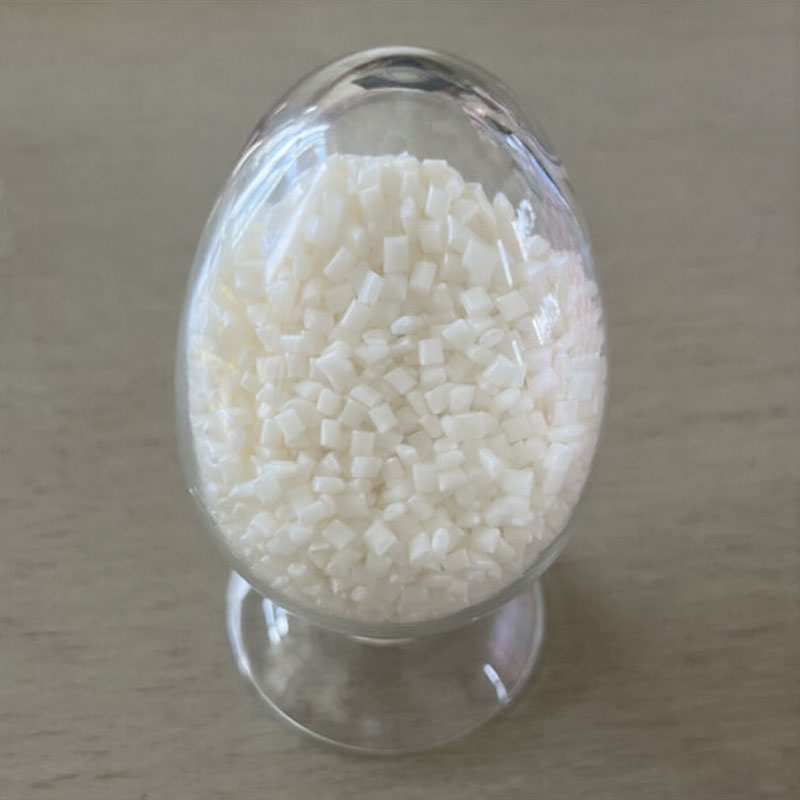
709AN/747AN/920AN
Antistatic ABS Compound
RENJIE® antistatic ABS compound with 10^8–10^10 Ω surface resistance. 709A…
View details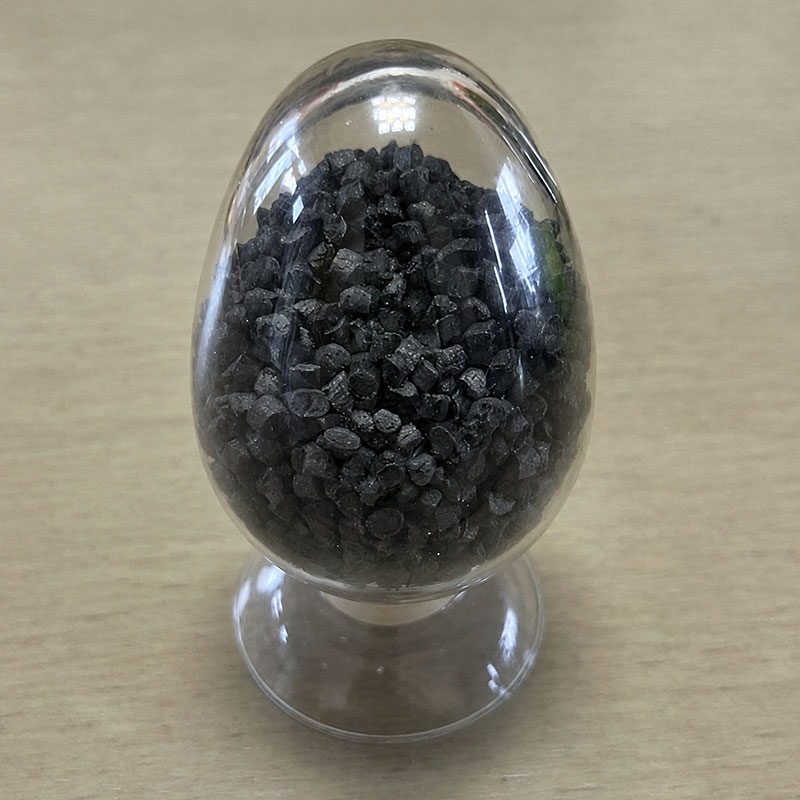
757CF20/757CF30/757CF15
15% Carbon fiber ABS
RENJIE carbon fiber reinforced ABS is a high-performance thermoplastic com…
View details70CF30/70CF20/70CF15
30% Carbon Fiber Nylon 66
Explore Carbon Fiber Conductive Nylon properties, CFRTP Conductive Nylon g…
View detailsRequest a quotation or sample
We reply with price, MOQ and lead time within one business day.
Need a quotation or product data?
Send us your specification and we will come back with a solution within 24 hours.