
PEEK Solutions


Injection Molded PEEK Natural
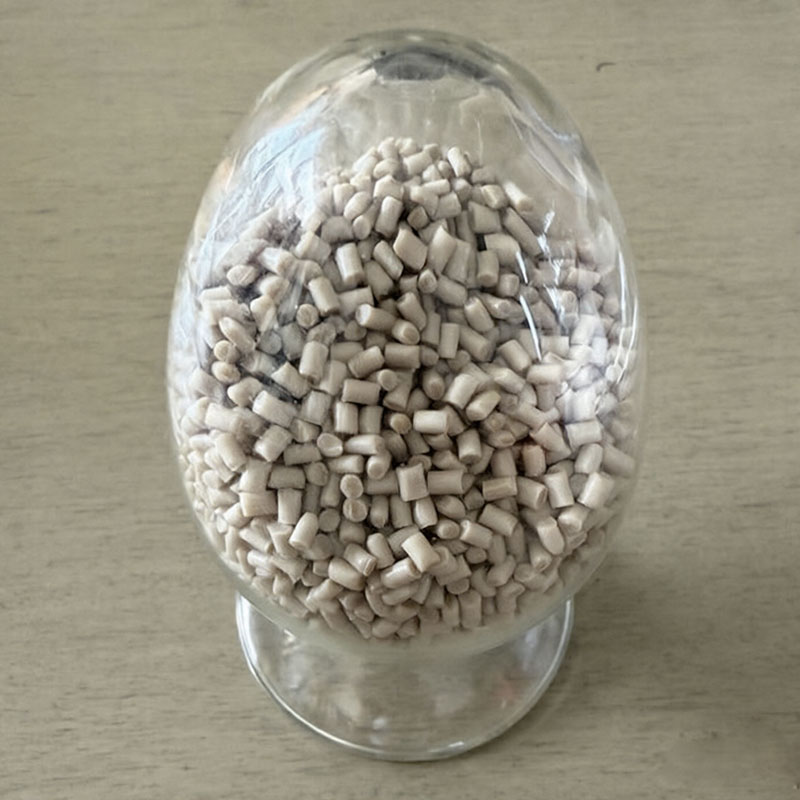
Model: K90N/K100N
RENJIE® injection molded PEEK guide: 260 °C continuous use, 360–400 °C barrel, 150–200 °C mould, 150–160 °C drying for 3–4 h. Full parameter table plus applications by industry.
| Product Description | Carbon fiber PEEK |
|---|---|
| RenJie®Grade | K90N/K100N |
| Appearance | Granules/Natural |
| Conductive filler | Carbon fiber/Carbon nanotube |
| Applications | Injection Molded parts, PEEK sheet |
| Processing | Extrusion/Injection |
RENJIE® Injection Molded PEEK: Properties, Processing Parameters and Applications
PEEK (polyetheretherketone) is a high-performance thermoplastic engineering plastic with an excellent overall property balance, which makes it particularly well suited to precision injection moulding. It is, however, an unforgiving material to process: high melting point and high melt viscosity mean the parameters must be set deliberately, not inherited from a PA or POM job.
This guide covers the property profile that justifies PEEK, the processing window that makes it work, and where it is actually used.
Properties of Injection Molded PEEK
| Property | Value / behaviour |
|---|---|
| Continuous operating temperature | up to 260 °C |
| Short-term temperature resistance | up to 300 °C or higher |
| Heat distortion temperature (HDT/A, 1.8 MPa) | >300 °C |
| Water absorption | <0.1% |
| Friction behaviour | Self-lubricating, low coefficient of friction, runs without lubrication long-term |
| Electrical behaviour | High dielectric strength, low dielectric constant and loss factor, stable at high frequency and high temperature |
| Chemical resistance | Acids, alkalis, oils, organic solvents and most chemicals; attacked only by strong oxidising media such as concentrated sulphuric acid |
High temperature resistance
Continuous operating temperature reaches 260 °C, with short-term resistance to 300 °C or higher. The heat distortion temperature under 1.8 MPa load exceeds 300 °C, so the material holds its shape in service temperatures that would soften most engineering plastics.
Excellent mechanical properties
High strength, high rigidity and fatigue resistance, with good mechanical stability even at elevated temperature — the combination that allows metal parts to be replaced without losing load capability.
Chemical corrosion resistance
Excellent resistance to acids, alkalis, oils, organic solvents and most chemicals. The material is corroded only in strong oxidising media such as concentrated sulphuric acid — a critical distinction when specifying seals and pump internals.
Low friction and wear resistance
Excellent self-lubricating properties and a low coefficient of friction allow long-term operation without lubrication, removing grease from the design and the maintenance schedule.
Electrical insulation
High dielectric strength with low dielectric constant and loss factor, maintaining stable electrical properties even at high frequencies and high temperatures — suited to connectors and test fixtures rather than only structural parts.
Dimensional stability
Extremely low water absorption (<0.1%) gives high dimensional accuracy after moulding and minimal shift with humidity, so a part moulded to tolerance stays within tolerance in a humid plant.
Injection Molding Processing Technology
Processing injection moulded PEEK requires special control because of its high melting point and high viscosity. The window below is the working baseline.
| Parameter | Setting |
|---|---|
| Drying (before moulding) | 150–160 °C for 3–4 h |
| Barrel temperature | 360–400 °C |
| Nozzle temperature | 370–400 °C |
| Mould temperature | 150–200 °C |
| Injection speed | Medium to high |
| Holding pressure | Appropriately high |
| Screw speed | 30–60 rpm |
| Annealing (post-treatment) | 150–200 °C for 1–2 h |
1. Raw material preparation
Dry the resin at 150–160 °C for 3–4 hours before injection moulding. This removes trace moisture and prevents bubbles and silver streaks in the moulded part.
2. Injection temperature control
Barrel temperature: 360–400 °C, adjusted according to part thickness and flowability requirements. Nozzle temperature: 370–400 °C. Mould temperature: 150–200 °C, which ensures sufficient crystallisation and reduces internal stress.
3. Injection parameters
Injection speed: medium to high, to ensure complete mould filling. Holding pressure: appropriately high, to reduce shrinkage and warpage. Screw speed: 30–60 rpm, to avoid shear overheating.
4. Post-treatment
Annealing at 150–200 °C for 1–2 hours eliminates internal stress and improves dimensional stability. Skipping it is the usual reason a PEEK part measures correctly on the bench and drifts after annealing or in service.
Reading the process window
| Symptom | First parameter to check |
|---|---|
| Bubbles, silver streaks | Drying time and temperature (150–160 °C, 3–4 h) |
| Short shots, incomplete fill | Injection speed and barrel temperature |
| Warpage, excessive shrinkage | Holding pressure, mould temperature, annealing |
| Brittle parts, high internal stress | Mould temperature and annealing cycle |
| Surface degradation, black specks | Barrel residence time and screw speed (shear overheating) |
Applications of Injection Molded PEEK
| Industry | Typical parts |
|---|---|
| Artificial intelligence | AI intelligent infrastructure components |
| Aerospace | Aircraft engine components, fasteners, sensor housings |
| Automotive | Transmission parts, braking system components, high-temperature electrical connectors |
| Medical devices | Surgical instruments, artificial joints, dental implants |
| Electronics and electrical | High-frequency connectors, insulating supports, chip test fixtures |
| Petrochemicals | Valve seals, pump impellers, downhole measuring instrument components |
| Food processing | Temperature-resistant, corrosion-resistant food-contact components |
Frequently Asked Questions
What barrel temperature should be used for PEEK? 360–400 °C, adjusted for part thickness and flowability. Nozzle temperature runs slightly higher, at 370–400 °C.
What mould temperature does PEEK need? 150–200 °C. A hot mould ensures sufficient crystallisation and reduces internal stress; a cold mould produces brittle, dimensionally unstable parts.
Does PEEK need drying before moulding? Yes. Dry at 150–160 °C for 3–4 hours to remove trace moisture and avoid bubbles and silver streaks.
Is annealing necessary? Annealing at 150–200 °C for 1–2 hours eliminates internal stress and improves dimensional stability. It is strongly recommended for precision parts.
What is PEEK's maximum service temperature? Continuous operating temperature up to 260 °C, short-term up to 300 °C or higher, with HDT/A at 1.8 MPa exceeding 300 °C.
What chemicals attack PEEK? Strong oxidising media such as concentrated sulphuric acid. PEEK resists acids, alkalis, oils, organic solvents and most other chemicals.
Moulding PEEK with RENJIE®
- Consistent granule quality — moisture-controlled supply, so drying behaves predictably.
- Grade selection support — unfilled, carbon-filled, glass-filled and ESD grades matched to the part, not the catalogue.
- Process guidance — the parameter window above, plus troubleshooting support for first-article runs.
Send your part drawing, service temperature and chemical exposure to receive a grade recommendation and processing sheet.
| Product Description | Carbon fiber PEEK |
|---|---|
| RenJie®Grade | K90N/K100N |
| Appearance | Granules/Natural |
| Conductive filler | Carbon fiber/Carbon nanotube |
| Applications | Injection Molded parts, PEEK sheet |
| Processing | Extrusion/Injection |
Related products
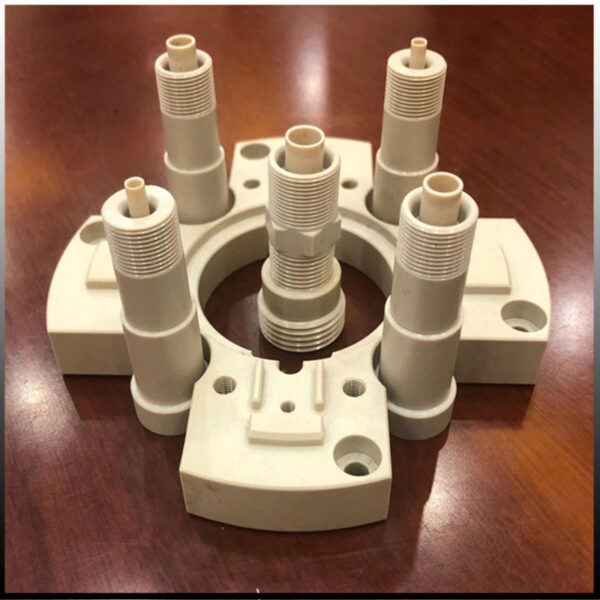
PEEK Machining Customized
PEEK Machining Customized
RENJIE® provides one-stop PEEK machining — PEEK granules, sheet and rod th…
View details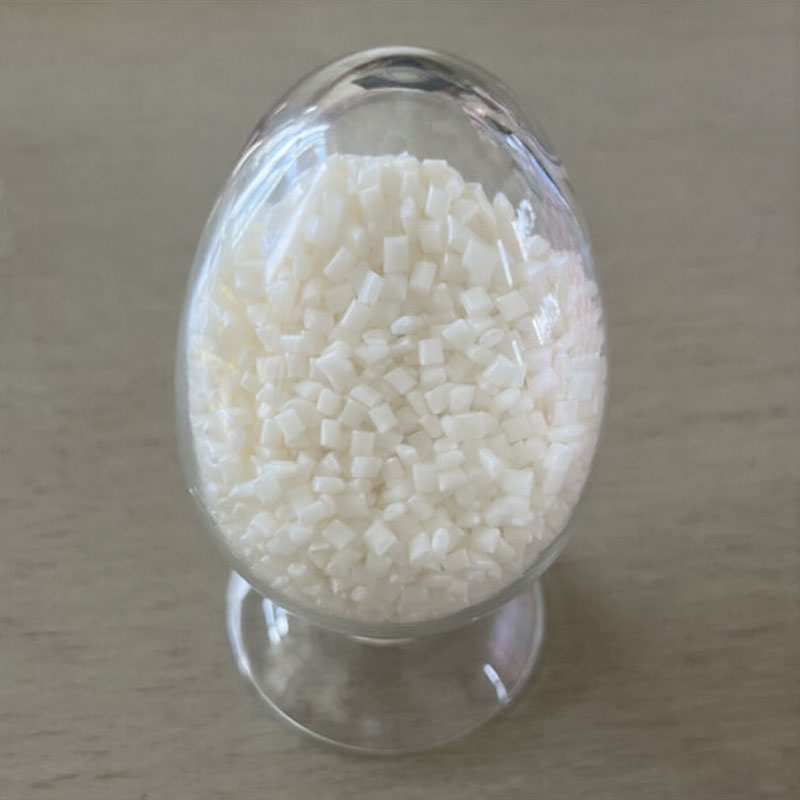
709AN/747AN/920AN
Antistatic ABS Compound
RENJIE® antistatic ABS compound with 10^8–10^10 Ω surface resistance. 709A…
View details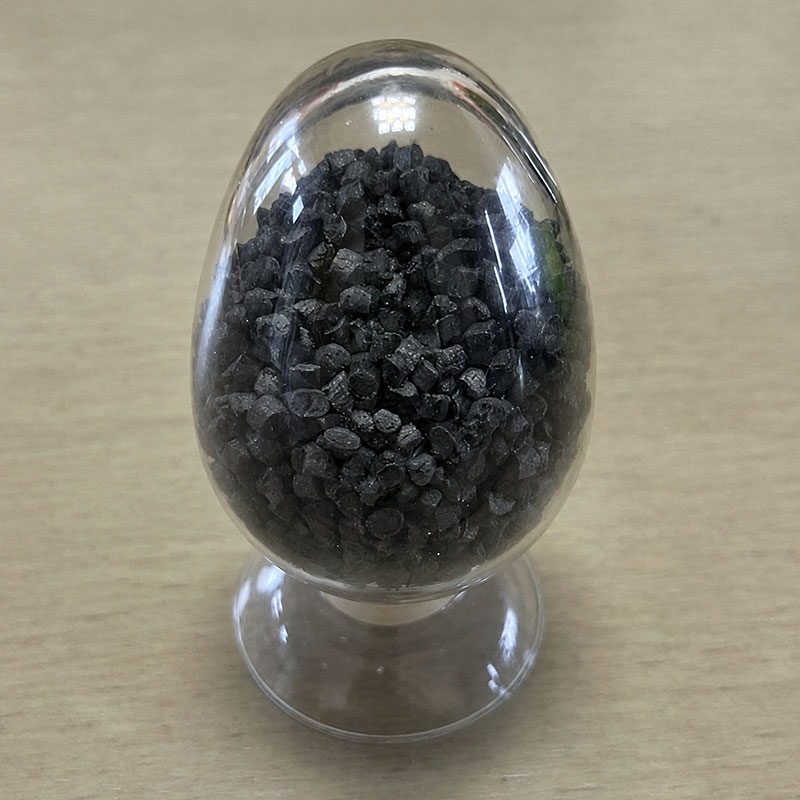
757CF20/757CF30/757CF15
15% Carbon fiber ABS
RENJIE carbon fiber reinforced ABS is a high-performance thermoplastic com…
View detailsRequest a quotation or sample
We reply with price, MOQ and lead time within one business day.
Need a quotation or product data?
Send us your specification and we will come back with a solution within 24 hours.